
Educational · Homeowner guide
How to Prevent and Thaw Frozen Pipes in Omaha & Council Bluffs
February 12, 2025 · Updated October 19, 2026 · 8 min read · By A Raymond Plumbing
In this article
Before the first hard freeze, unhook every garden hose, shut the inside valve to each outdoor faucet and drain it, and find your main water shutoff. On the coldest nights, open the sink cabinets on outside walls and let a faucet drip. If a pipe freezes, keep the faucet open and warm the pipe gently, never with a flame. If it bursts, shut off the main and call us.
Which pipes freeze first, and why
Water gets bigger when it freezes. Inside a pipe it has nowhere to go, so the pressure builds until the pipe or a fitting gives. The split often stays hidden while the pipe is frozen. You find out when it thaws and the water starts running into the wall.
The American Red Cross lists the pipes that freeze most often: outdoor hose faucets, sprinkler lines, pipes in unheated spaces like crawl spaces, garages, attics and kitchen cabinets, and pipes that run along outside walls with little insulation (Red Cross, frozen pipes). When a faucet stops running, the Red Cross says the frozen spot is likely against an outside wall or where the water service comes into the house through the foundation.
People often ask how cold it has to get, and for how long. There's no single number. Wind, how exposed the pipe is and how long the cold lasts all matter. Omaha's water utility, MUD, puts it plainly: "A single hard, overnight freeze can burst either the faucet or the pipe it's connected to" (MUD, Winterizing Your Water Pipes).
Get ready before the first hard freeze
1. Take care of the outdoor faucets first
If you only do one thing this week, do this.
- Unhook every garden hose, including from frost-free faucets, then drain the hose and put it away. MUD says detaching the hose lets the water drain out of the pipe.
- Find the inside valve that feeds each outdoor faucet and close it.
- Go back outside and open the outdoor faucet so the water left in the line can drain. The Red Cross says to leave it open, so any water still in there has room to expand without breaking the pipe.
- Drain the sprinkler system the way the installer or manufacturer says to. The Red Cross also says not to put antifreeze in these lines unless the directions call for it.
2. Find your main water shutoff now, not during a flood
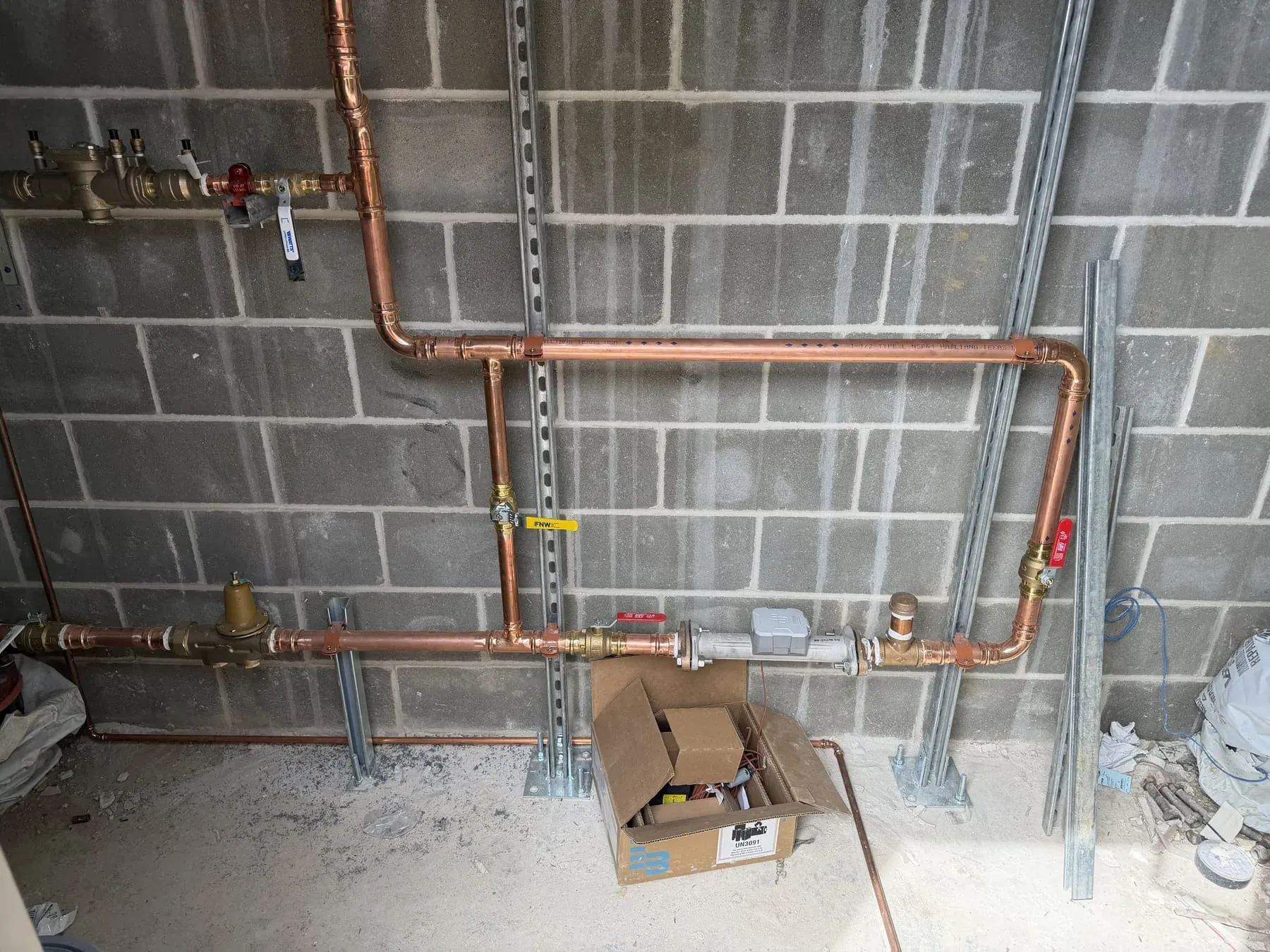
Walk to where the water line comes into the house. In most homes that's in the basement, at the water meter. Turn the shutoff off and back on once so you know it works and which way it turns. If it won't turn, or it drips when you move it, get it fixed on a calm fall day instead of finding out at 2 a.m. with water on the floor.
Show everyone in the house where it is. A strip of bright tape on the handle helps.
3. Cover the cold spots
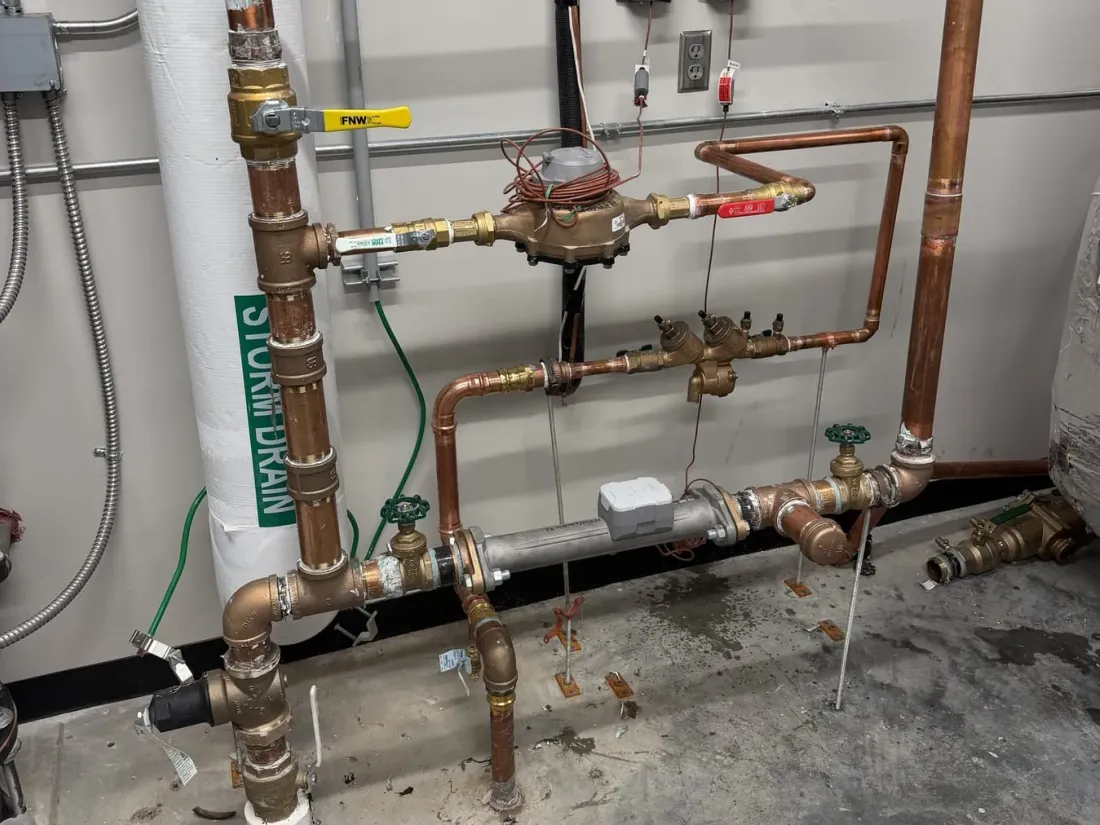
Wrap exposed pipes in unheated areas with foam pipe sleeves. Pipes in the garage or a crawl space can also get UL-listed heat tape or heat cable, which the Red Cross suggests for exposed water pipes. MUD's list adds filling cracks in doors, windows and walls near water meters and pipes, so cold drafts don't reach them.
4. On the coldest nights
- Open the kitchen and bathroom sink cabinets on outside walls so warm air reaches the pipes. Move cleaners up out of kids' reach while the doors are open.
- Let a faucet that's fed by an exposed pipe drip. The Red Cross says even a trickle of moving water helps keep a pipe from freezing.
- Keep the thermostat at the same setting day and night until the cold snap passes. Your heating bill may go up, but the Red Cross points out that a burst pipe is a much costlier repair.
- Keep the garage door closed if water lines run through the garage.
5. If you're leaving town
Leave the heat on. The Red Cross says no lower than 55°F. MUD also suggests having someone run every faucet briefly each day, and turning off the water at the main shutoff (or MUD's stop box) so a frozen pipe can't keep running while you're gone. For a longer trip, MUD goes a step further: drain all pipes, toilets and water lines.
If a pipe freezes or bursts
| What you notice | What it usually means | What to do |
|---|---|---|
| Only a trickle, or nothing, from one faucet | A frozen spot in the line feeding that faucet | Keep the faucet open and warm the pipe (steps below). Check your other faucets too. |
| No water anywhere in the house | Frozen where the line comes in, or at the meter | Warm the area where the water enters the house. In Council Bluffs, if the meter itself is frozen, call the Water Works (below). |
| Frost on a pipe you can see | Ice inside the pipe | Warm it slowly and watch for drips as it thaws. |
| Water spraying, or water in the ceiling or wall | A burst pipe | Shut off the main water first, then call. |
Thawing a frozen pipe safely
- Open the faucet the frozen pipe feeds. As the ice melts, running water helps melt the rest.
- Warm the pipe gently. The Red Cross lists an electric heating pad, a hair dryer, a portable space heater kept away from anything that can burn, or towels soaked in hot water.
- Never use a torch, a propane or kerosene heater, a charcoal stove or any open flame.
- Keep electric dryers and heaters out of standing water.
- Keep at it until full water pressure is back, then check the other faucets. If one pipe froze, others may have too.
- Watch the thawed spot for a few minutes for drips.
Call a licensed plumber if you can't find the frozen spot, can't reach it, or can't get it to thaw. That's the Red Cross's advice too, and we'd rather take that call before the pipe splits than after.
If a pipe has already burst
- Shut off the main water valve. This stops the flood.
- If water is near outlets, cords or the electrical panel, stay away from it and call for help.
- Take photos before you clean up, in case you file an insurance claim.
- Call us. Emergency calls are answered day and night on both lines.
What we see on jobs around the metro
Outdoor faucets show up again and again in our job log. Our public job map has five hose faucet jobs between January 6 and March 11, 2026, in Bellevue, Omaha, Council Bluffs and Pacific Junction. In early March, a customer in Council Bluffs called with an outdoor faucet spraying water. Freezing temperatures had broken it, and our tech's notes say it had been left on. In Omaha that January, our crew replaced a broken outdoor faucet along with the inside shutoff valve that feeds it, so the homeowner could turn the water back on.
Burst lines inside the house happen too. After a cold stretch in December 2022, a Council Bluffs customer left this review: "I had a water pipe burst due to the cold weather that came in December 2022." Our plumber, he wrote, "had the issue fixed in two hours."
Omaha and Council Bluffs: who to call for what
Your water utility and your plumber cover different parts of the line, so it helps to know who to call.
In Omaha (MUD water)
MUD's winter tips cover the same basics as above: unhook hoses, keep heat moving around meters and pipes, trickle a faucet where pipes have frozen before, and shut the water off at the stop box if you'll be away. If your own pipes freeze, MUD says to contact a plumber to thaw them, or to thaw them yourself with an electric heater or a hair dryer where the water line comes into the house (MUD, Winterizing Your Water Pipes). For the work we do in Omaha, see our Omaha 24/7 emergency plumbing page and Omaha residential plumbing.
In Council Bluffs (Council Bluffs Water Works)
The Water Works says that if your meter freezes, you should notify its office right away and not try to thaw the meter yourself, because you can ruin it and end up paying for a new one. It also asks customers to keep the shutoffs at the meter and at the curb easy to reach. For leaks on your service line or a fixture, it says to call a plumber; for a leaking meter, call the Water Works at 712-328-1006 (Council Bluffs Water Works FAQ). For our side of it, see Council Bluffs 24/7 emergency plumbing and Council Bluffs residential plumbing.
More for each side of the river: Omaha · Council Bluffs.
Common questions
Should I let my faucets drip at night?
On the coldest nights, yes, for faucets fed by pipes on outside walls or in cold spaces. The Red Cross says even a trickle of moving water helps keep a pipe from freezing. You don't need every faucet in the house running.
What temperature should I keep the house at when I travel?
The Red Cross says to leave the heat on, set no lower than 55°F. If you'll be gone a while, MUD also suggests shutting off the water and having someone run the faucets daily.
When should I stop and call a plumber?
When you can't find or reach the frozen spot, when it won't thaw, or when you see a leak or water damage. A burst pipe is an emergency: shut the main off first, then call.
If a pipe has frozen or burst, call the line for your side of the river.
Related reading: Seasonal plumbing maintenance checklist for Omaha and Council Bluffs homeowners · Recent jobs on our map