
Educational · Homeowner guide
Comparison Guide: Best Residential Water Treatment Systems
January 26, 2026 · 13 min read · By A Raymond Plumbing
In this article
- Understanding Comparison Criteria
- Water Softeners: Traditional vs. Salt-Free Options
- Reverse Osmosis Systems: Effective Filtration
- Whole House Filtration: Comprehensive Solutions
- Emerging Technologies in Water Treatment
- Practical Recommendations for Omaha Residents
- Bringing It All Together: Choosing the Right System
- Conclusion
Clean, safe water should be simple. Choosing the right solution is not. With dozens of technologies and bold claims, it can be hard to tell what truly improves taste, protects health, and preserves plumbing. This comparison guide cuts through the noise by focusing on the best residential water treatment systems, explaining how each option performs in real homes with real water challenges.
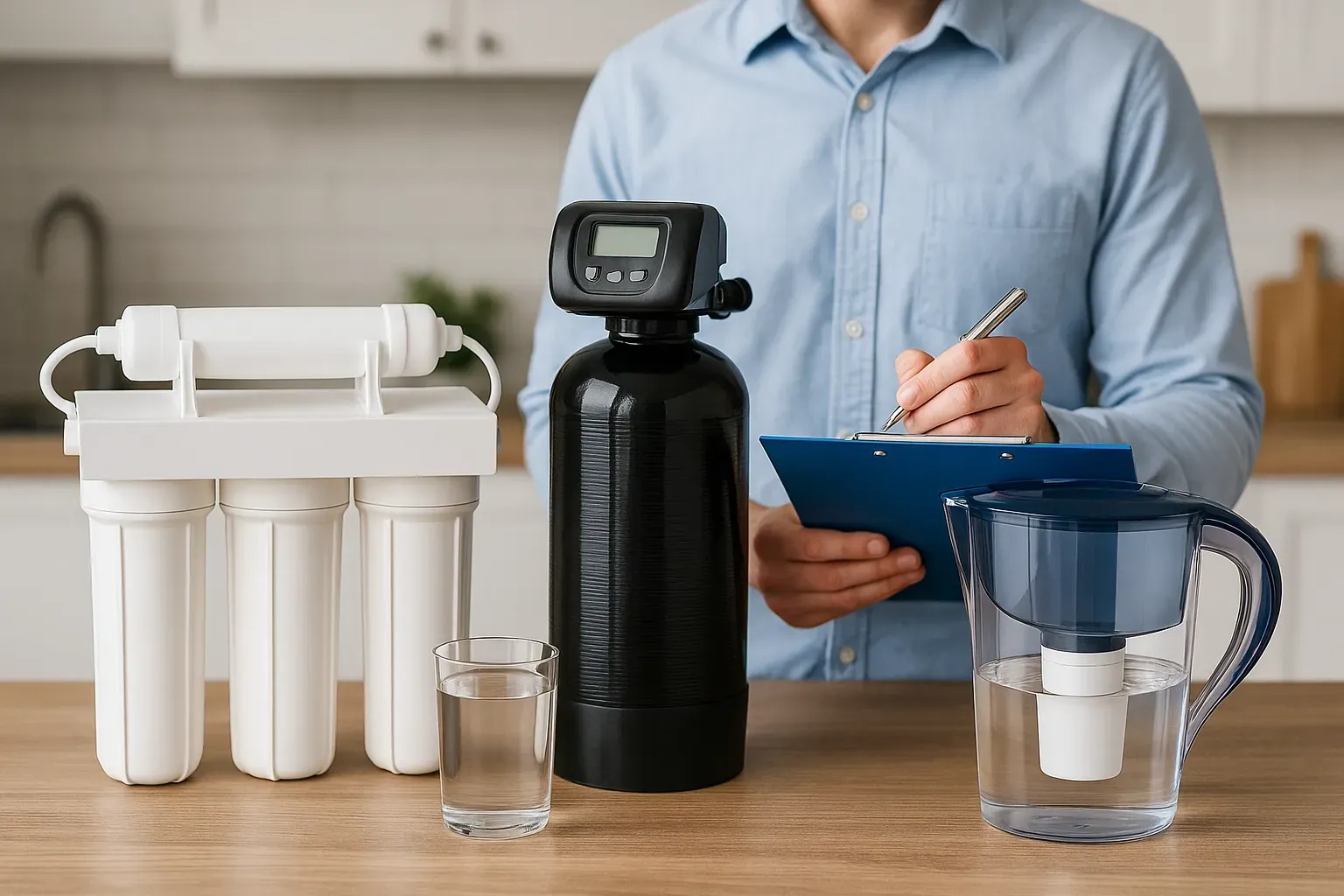
You will learn how whole house filters, reverse osmosis units, water softeners, and UV purifiers differ in contaminant removal, capacity, flow rate, and long term costs. We will decode key specs such as micron ratings, GPM, grain capacity, and NSF or ANSI certifications, so you can evaluate products with confidence. Expect practical guidance for both municipal and well water. We cover chlorine and chloramine, lead, PFAS, hardness, iron, and microbial risks, then show which systems address each issue. Installation complexity, filter life, and maintenance schedules are compared side by side, along with typical price ranges and ongoing costs. By the end, you will know exactly which system type fits your water profile, budget, and performance goals.
Understanding Comparison Criteria
How to compare the best residential water treatment systems
Choosing among the best residential water treatment systems starts with three criteria: effectiveness, cost, and maintenance. For effectiveness, align technology with the problem. Whole house carbon filtration improves taste and odor and reduces chlorine and many VOCs, but it does not cut dissolved minerals. Reverse osmosis at the sink targets dissolved solids and contaminants such as arsenic and some disinfection byproducts, making it ideal for drinking and cooking. Water softeners remove hardness minerals that cause scale, protecting pipes and water-using appliances, while salt free conditioners reduce scale formation but do not actually soften or remove contaminants. Typical installed costs range from about 800 to 3,000 dollars for whole house filtration, 1,200 to 3,000 dollars for softeners, 300 to 900 dollars plus installation for under sink RO, and 500 to 1,200 dollars for UV; plan for filter changes every 6 to 12 months, RO membranes every 2 to 3 years, UV lamps annually, and softener salt as usage dictates.
Omaha specific water quality needs
Omaha’s water is commonly classified as very hard, often above 200 ppm, which accelerates scale buildup, raises energy use, and shortens appliance life, see the local overview of hard water impacts here, effects of hard water on plumbing. For most households of three to five people, a correctly sized softener in the 32,000 to 48,000 grain range is a practical baseline. Drinking water concerns also warrant attention, as testing summaries note several contaminants that exceed health based guidelines even when legal limits are met, see Omaha tap water quality data. Aging infrastructure and legacy lead components can add risk in certain service areas, see Nebraska tap water safety context. Given these factors, many homes benefit from a layered approach, sediment plus carbon filtration for whole house use, a softener for scale control, and point of use RO for drinking, with UV considered if bacterial risk is identified.
A Raymond Plumbing, your informed ally
A Raymond Plumbing begins with professional water testing, then right sizes systems to your flow rate, hardness, and contaminant profile. Their team designs integrated solutions, for example, a whole house carbon and sediment stage to protect plumbing, a 40,000 grain softener to manage Omaha’s hardness, and a compact RO system at the kitchen for high purity drinking water. Expert installation preserves pressure, minimizes pressure drop, and ensures proper drain routing and code compliance. Ongoing maintenance plans track filter changes, resin health, and UV lamp cycles, reducing long term costs. Serving Omaha and Council Bluffs, A Raymond Plumbing helps you compare options with total cost of ownership in mind, then keeps your system performing year after year.
Water Softeners: Traditional vs. Salt-Free Options
Why soften in Omaha’s very hard water
Hard water is the norm in the Omaha metro, often 180 to 220 ppm, roughly 10 to 13 grains per gallon, which USGS classifies as very hard. That mineral load drives scale in heaters and fixtures, reduces appliance efficiency, and leaves spots on glass and tile. A water softener targets calcium and magnesium so households use less soap and equipment lasts longer. For a quick primer on key terms and processes, see these water treatment FAQs. In homes that soften, residents report silkier feel, easier cleaning, and fewer scale related service calls.
Traditional ion exchange vs. salt free conditioners
Traditional ion exchange systems physically remove hardness minerals by swapping them for sodium or potassium on a resin bed, then periodically regenerate with brine. They deliver consistently soft water near 0 gpg, maximize protection for tankless heaters and dishwashers, and noticeably boost soap performance. Tradeoffs include salt replenishment, a regeneration drain connection, and a small amount of added sodium in tap water, which matters for low sodium diets. Salt free systems, often called conditioners, use media such as template assisted crystallization to keep minerals from sticking to surfaces, so scale accumulation slows without salt or wastewater. Water will still test hard, so spotting and soap scum reduction are limited compared with ion exchange, especially at Omaha hardness levels.
Get it done right with A Raymond Plumbing
A clear decision starts with a professional assessment. The A Raymond Plumbing team tests hardness on site, reviews peak flow rates, confirms space and drain options, and sizes equipment so you are protected without overspending. Technicians handle code details such as bypass, discharge, and backflow, then program regeneration to local hardness for efficiency and longevity. They can integrate whole house filtration for chlorine and taste with your softener, a smart bundle when comparing the best residential water treatment systems. Get started with A Raymond Plumbing in Omaha.
Reverse Osmosis Systems: Effective Filtration
What RO removes and why it matters
Reverse osmosis, a membrane-based process, excels at stripping dissolved contaminants that slip past standard carbon filters. Independent performance data indicate RO can reduce nitrates by roughly 90 to 98 percent, a meaningful safeguard where fertilizer runoff can influence private wells and small systems around the metro see nitrate reduction performance. It also cuts fluoride by approximately 90 to 97 percent, helpful for households that want tighter control of intake even when municipal water is fluoridated see fluoride reduction performance. Beyond these targets, RO lowers total dissolved solids, many metals, and a range of salts, improving taste and clarity. Compared with basic carbon filtration, which is excellent for chlorine and odor, RO is the better tool when the priority is dissolved ions like nitrate and fluoride. For Omaha and Council Bluffs homeowners prioritizing the best residential water treatment systems for drinking water, RO is the high-precision option.
Cost vs benefit for Omaha households
For most families, an under-sink RO system delivers the best value. Typical equipment costs run about 200 to 600 dollars for a quality point-of-use unit, while whole-home RO can range from 5,000 to 12,000 dollars due to larger membranes, storage, and re-pressurization needs RO system cost ranges. Local installation generally falls near 300 to 500 dollars for an under-sink unit, and annual maintenance, including filter changes and periodic membrane replacement, often totals 150 to 300 dollars. If a family currently spends 30 to 50 dollars per month on bottled water, an under-sink RO can pay for itself in two to four years, with the added benefit of better cooking and coffee quality. Some Nebraska programs periodically offer tax credits or well-owner rebates for nitrate mitigation, so checking current eligibility can further improve ROI. The bottom line, targeted RO delivers premium drinking water at a manageable lifetime cost.
Choosing between under-sink and whole-home RO, and who should install it
Choose under-sink RO for kitchens and wet bars where drinking and cooking water matter most; it is compact, efficient, and simpler to maintain. Whole-home RO is best reserved for special cases, such as very high TDS or specific contaminant issues systemwide, since it is more complex and costly. In Omaha’s very hard water, pair RO with a water softener to protect the membrane and sustain flow rates. Compared with carbon-only filters, which do not reliably remove nitrates or fluoride, RO is the appropriate selection when lab results flag those ions. Action steps: start with a certified water test, size the RO at 50 to 75 GPD for a family of four, add a polishing or remineralization cartridge for taste, and plan 6 to 12 month prefilter changes with membrane service every 2 to 5 years. For a right-sized design and clean installation, A Raymond Plumbing is a trusted local installer, integrating RO with existing softeners, providing maintenance schedules, and ensuring code-compliant connections.
Whole House Filtration: Comprehensive Solutions
Advantages at every tap
Whole house filtration treats water at the main line, so every faucet, shower, and appliance receives cleaner water. Carbon based media reduce chlorine, lead, pesticides, and VOCs, improving safety and taste Benefits of a whole house filter. Homeowners often report fewer odors and less skin dryness once chlorine is reduced Benefits for taste and skin. In Omaha and Council Bluffs, supply capacity is strong, the Council Point plant expanded to 10 million gallons per day in 2022, yet distribution disinfectants and fine sediment can still reach fixtures. Pairing whole house filtration with a softener helps protect water heaters and dishwashers by limiting chemicals and scale at the same time.
Systems compared, when to choose what
For city water, a sediment prefilter plus catalytic carbon is a solid baseline for odor, chlorine, and many VOCs. Add KDF when dissolved metals are a concern; add iron media if orange staining appears; include UV only when microbiological risk is present. Whole house filtration covers showers, laundry, and cooking, while an under sink reverse osmosis unit is best for ultra low TDS drinking water at one location. Size systems for peak demand, about 10 to 15 gallons per minute for 2 to 3 bath homes, keeping pressure drop under 10 psi.
Costs, upkeep, and A Raymond Plumbing support
Installed costs typically range from 1,500 to 5,000 dollars depending on media size, flow rating, and any UV or iron stages. Plan for sediment and carbon replacements every 6 to 12 months, with annual inspections to confirm flow and chlorine reduction, high usage homes may need shorter intervals Appliance and environmental benefits. Pros include whole home coverage and better taste, the main tradeoff is higher upfront price and periodic filter changes, which long term savings often offset. A Raymond Plumbing.com provides end to end support, onsite water testing, sizing for Omaha peak demand, code compliant installation with bypass and drain routing, and integration with softeners and backflow prevention. Maintenance plans cover filter changes, UV lamp schedules where installed, performance verification, and emergency service, so clean water is consistent throughout the home.
Emerging Technologies in Water Treatment
AI-powered operational intelligence
In the best residential water treatment systems, AI turns passive equipment into adaptive platforms. Sensor arrays track flow, pressure, turbidity, and chlorine, then machine learning optimizes backwash timing, flush cycles, and UV output. Compared with fixed schedules, predictive controls cut unnecessary regenerations, often lowering salt and water use in softeners by 20 to 30 percent while preserving capacity. These methods mirror utility scale trends in the Contractor Magazine analysis of advanced tech and water reuse. Trade offs include higher upfront cost, dependence on stable Wi Fi, and periodic sensor calibration.
Smart systems for Omaha homes
Omaha’s very hard water and rising adoption of whole home filtration make smart controllers valuable. A practical bundle pairs a demand initiated softener, a carbon filter with flow sensing, and a motorized shutoff tied to leak detectors. Apps deliver real time hardness trends, filter life, and alerts, so a pinhole leak or stuck fill valve is isolated before thousands of gallons are lost. Voice assistants can set shower temperatures and conservation timers, and emerging greywater modules may divert laundry or shower water to irrigation where codes allow. With public capacity growing to 10 million gallons per day at Council Point in 2022, homeowners can complement municipal reliability with precise in home control.
A Raymond Plumbing readiness
A Raymond Plumbing.com is preparing teams with diagnostics training, secure commissioning practices, and hands on labs for IoT controllers. Our staged rollout is simple, test the water, install smart leak shutoff first, add a demand initiated softener and Wi Fi enabled RO, then enable AI alerts. We configure data retention, permissions, and threshold logic, and schedule biannual sensor checks to protect warranty and accuracy. For most households, this path delivers measurable savings, better tasting water, and fewer emergencies, with a clear upgrade lane to whole home automation.
Practical Recommendations for Omaha Residents
Best options by need and budget
For most Omaha households, the best residential water treatment systems pair a whole-house filter for taste and odor with targeted solutions for specific contaminants. A carbon media filter at the main line reduces chlorine and organics, and an iron stage can address orange staining in fixtures. Add a water softener to protect plumbing and improve efficiency in very hard water, which also reduces spotting and soap use. For drinking and cooking, an under-sink reverse osmosis unit delivers high purity at modest cost, typically 300 to 1,500 dollars installed. Whole-home RO is rarely necessary, reserved for unusually high dissolved solids, and often runs 5,000 to 12,000 dollars. Salt-free conditioners help control scale where salt use or discharge is a concern, but they do not remove hardness, so expectations should focus on scale reduction rather than softened feel.
How to choose and get expert help
Begin with a comprehensive water test that screens for hardness, iron, manganese, chlorine, lead, nitrates, and bacteria, then define your goals, softer water at every tap, or high-purity drinking water. Size equipment to your home, two simultaneous showers plus a sink can hit 6 to 8 gallons per minute, so select systems that maintain flow without pressure loss. Check independent certifications, NSF or ANSI 42 and 53 for filtration, 44 for softeners, 55 for UV, and 58 for RO, and compare lifecycle cost of filters, salt, and media. Typical upkeep includes RO prefilters every 6 to 12 months, membranes every 2 to 5 years, and whole-house media replacement in 5 to 10 years. Note local nuances, the Council Point Water Purification Plant now produces up to ten million gallons per day, yet in-home treatment fine tunes taste, odor, and scale. A Raymond Plumbing provides in-home assessments, code-compliant installation, and personalized plans that align performance with budget, then supports you with maintenance and rapid service.
Bringing It All Together: Choosing the Right System
The best residential water treatment systems only deliver top value when they match your water profile, household size, and budget. Compare by use case. Whole-house carbon filtration improves taste and odor at every tap and reduces chlorine and lead, yet it does not lower dissolved solids. Point-of-use reverse osmosis excels for drinking water, removing a broad range of dissolved contaminants, although it produces water at a slower rate and needs periodic filter changes. For Omaha’s very hard water, typically about 10 to 13 grains per gallon, a traditional softener prevents scale and protects appliances, while salt-free conditioners are lower maintenance but are mainly for scale control and do not actually soften. Example, a four-person home with 2.5 baths and 12 gpg hardness often benefits from a whole-house carbon filter, a correctly sized 32,000 to 48,000 grain softener, and an RO system at the kitchen sink.
Selecting and sizing are where expertise pays off. Professional installation preserves flow, minimizes pressure drop, ensures code-compliant drains and bypasses, and extends media life. Local context matters too. Council Bluffs increased its purification plant capacity to 10 million gallons per day in 2022, yet final-mile treatment in the home still addresses taste, scale, and plumbing-based metals. Contact A Raymond Plumbing to schedule a water test, right-size equipment, and plan maintenance. Prioritize water quality today, protect your plumbing and health, and enjoy better water with confidence.
Conclusion
The right system starts with your water. No single solution fits every home. Use your test results to match contaminants and flow needs to the best technology. Whole house filters improve taste and reduce chlorine and sediment. Reverse osmosis targets dissolved contaminants like lead and PFAS at the tap. Softeners prevent scale from hardness. UV neutralizes microbial risks. Check the specs that matter, micron rating, GPM, grain capacity, and NSF or ANSI certifications. Balance upfront price with filter life, service intervals, and long term operating costs. Ready to decide? Use the side by side comparison in this guide, identify your top concerns, then shortlist certified models that meet your capacity and installation constraints. If in doubt, consult a qualified installer. Take the next step today, choose confidently, and enjoy cleaner water for years.