
Homeowner guide
The True Cost of Water Heater Services: An In-depth Analysis
March 11, 2026 · Updated May 12, 2026 · 12 min read · By A Raymond Plumbing
In this article
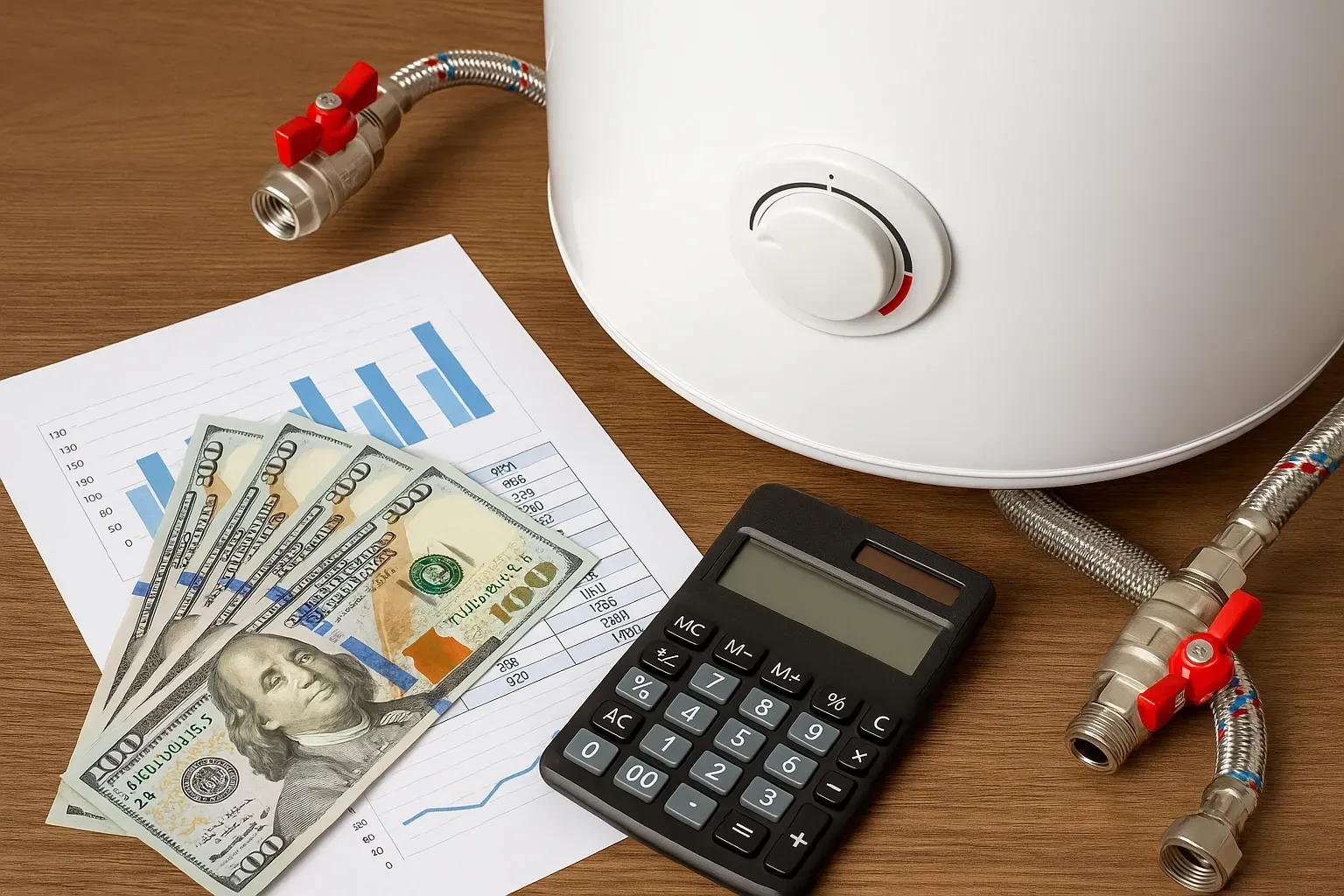
If your water heater fails at 6 a.m., the price you pay often feels like a mystery. Yet there is a clear logic behind every line on the invoice. In this in-depth analysis, we break down the water heater service cost in plain, beginner friendly terms. You will learn what drives the number a technician quotes you, from diagnostic fees and labor rates to parts pricing, permits, code upgrades, disposal, and emergency surcharges.
We will map out typical ranges for maintenance, repairs, and full replacements, and explain how fuel type, tank versus tankless design, size, efficiency rating, access to the unit, and local regulations influence the total. You will see how geography and seasonality affect availability and pricing. We will also show you how to read a quote, what questions to ask, and how to avoid common upsells.
Finally, we outline simple checks you can safely do yourself, when to call a licensed pro, and whether repair or replacement makes better financial sense. By the end, you will know what to expect, how to budget, and how to get fair value for any water heater service.
Understanding Water Heater Repair Costs
From minor fixes to major overhauls
Repair expenses span a wide range, and the part that failed usually sets the price. Minor fixes, such as thermostat calibration or replacement, typically run $100 to $300, while pilot light or igniter issues on gas units often fall between $75 and $150. Moderate repairs include replacing an electric heating element, usually $150 to $350, or a temperature and pressure relief valve, commonly $150 to $400. Major items, like a gas control valve, can cost $200 to $750, and tank leak remediation can push $500 to $1,200, often approaching replacement territory. For a clear reference on fix-by-fix pricing, see this concise water heater repair cost guide.
What Omaha homeowners typically pay
For Omaha homeowners, the typical water heater service cost for repairs ranges from $150 to $600, aligned with national averages but influenced by local labor. Cold snaps can trigger pilot outages and stress relief valves, while hard water can accelerate sediment buildup that burns out elements. A common scenario, a failing gas control valve on an 8-year-old 50-gallon gas heater plus a sediment flush, can land around $450 to $700. When a repair quote exceeds 50 percent of a replacement, consider swapping the unit, since a standard 50-gallon gas replacement in Omaha often runs $1,300 to $1,500, with broader tank-style replacements ranging $600 to $2,500 and many tankless replacements around $1,400. To gauge local price bands and availability, review Omaha listings on Modernize’s local repair page.
How A. Raymond Plumbing keeps costs predictable
A. Raymond Plumbing focuses on fast diagnostics, clear estimates, and stocking common parts to reduce return visits and labor charges. Technicians evaluate age, warranty, efficiency, and total repair exposure to advise repair versus replacement with transparent pricing. Preventive steps, such as annual inspections, sediment flushing, anode rod checks, and pipe insulation, reduce emergency calls and extend system life. For winter resilience, the team recommends frost protection and timely relief valve testing to avoid pressure-related failures. Whether you need same-day repair, 24/7 emergency help, or guidance on upgrading to high-efficiency options, A. Raymond Plumbing serves Omaha and Council Bluffs with reliable, cost-effective solutions that protect your home and budget.
Evaluating When Replacement is More Cost-Effective
Signs replacement may be smarter than repair
Most tank water heaters last 8 to 12 years, and tankless systems can reach about 20, but Omaha’s hard water and cold snaps can shorten that span. Persistent moisture at the base, even a slow drip, usually signals internal tank corrosion that cannot be repaired. Rumbling after flushing, inconsistent hot water, or rusty, foul smelling hot water indicate advanced sediment buildup and declining efficiency. If you see multiple symptoms at once, a replacement is often safer and more economical than another fix, as summarized in this homeowner replacement timing guide.
Comparing costs: repair vs. replacement
Typical repair costs run about $150 to $600, with complex fixes higher, per Angi’s 2026 data. By comparison, Omaha homeowners pay about $1,300 to $1,500 for a new 50 gallon gas tank, electric models often start near $1,100, and entry tankless options start around $2,200. National ranges put standard tank replacements at roughly $600 to $2,500, with many tankless swaps near $1,400, and professional labor usually makes up more than half of that total. Use the 50 percent test, if a repair quote is half or more of the installed price of a comparable new unit, replacement tends to deliver better long term value.
A. Raymond Plumbing’s replacement services: ensuring value and efficiency
A. Raymond Plumbing starts with a clear, code aware assessment of age, capacity, venting, and fuel supply, then aligns recommendations to your water heater service cost and performance goals. For Omaha and Council Bluffs homes and businesses, technicians right size the system, add pipe and tank insulation, and advise on frost protection for garages or exterior utility rooms. Installations include permits, safe removal and disposal of the old heater, precise hookups, and optional mixing valves or recirculation to reduce wait times and water waste. You also get transparent estimates of ownership costs and a maintenance plan with annual inspections to keep efficiency high and warranties valid.
Professional Installation Costs Explained
Why labor makes up over half of installation expenses
Installing a water heater is not just “set and forget.” Licensed plumbers remove the old unit, update gas or electrical connections, add venting, bring the setup to code, pull permits, and test for combustion safety and leaks. Accessibility also drives labor time; tight basements or crawl spaces can push effective labor rates higher and add hours to the job, especially when venting runs are long. Conversions, for example moving from a tank to tankless, often require new wiring or gas sizing, which multiplies labor. Permits and inspections add administrative time and scheduling. For a typical Omaha 50 gallon gas replacement that totals $1,300 to $1,500, more than half of the bill often reflects these labor tasks, a pattern echoed by industry data on water heater labor drivers water heater labor cost factors.
Ways to save on installation, DIY considerations, and rebates
DIY looks cheaper, but incorrect gas, venting, or 240 volt electrical work risks leaks, carbon monoxide, warranty denial, and failed inspections. Safer ways to trim water heater service cost include choosing a like for like replacement to avoid re-piping or panel upgrades, scheduling during standard hours, clearing access, and confirming the heater fits through doorways. Ask your installer to reuse sound venting or gas flex lines only when code allows. Stack incentives where possible. Heat pump water heaters can qualify for a federal credit equal to 30 percent of project cost up to $2,000, and many utilities offer $150 to $750 rebates for efficient models.
Benefits of choosing A. Raymond Plumbing for installations
A. Raymond Plumbing handles permits, code compliance, and inspection coordination for Omaha and Council Bluffs homes and businesses. Techs size expansion tanks, protect against winter freeze risks, and integrate softeners or backflow devices when needed. You get clear estimates that separate equipment and labor so savings opportunities are visible. We also guide customers to available rebates and set up annual inspections to safeguard efficiency and warranties. For tank or tankless, professional installation protects your investment and reduces lifetime costs.
Opting for Energy-Efficient Water Heaters
Why energy‑efficient models cut costs
Energy‑efficient water heaters use technologies that lower fuel or electricity use without sacrificing hot water. Heat pump water heaters capture ambient heat and move it into the tank, which can make them up to four times more efficient than standard electric units. According to ENERGY STAR, an average family can save about $550 per year with an efficient heat pump model, often recouping the higher upfront price in roughly three years. See detailed estimates here: ENERGY STAR certified heat pump water heater savings. In Omaha, where a 50‑gallon gas replacement typically runs $1,300 to $1,500 and electric starts near $1,100, the monthly utility savings from efficient models can materially offset water heater service cost over the system’s life. New federal standards are also accelerating efficiency gains, with the Department of Energy projecting more than $7.6 billion in annual household utility savings nationwide, which supports long‑term affordability for homeowners and businesses, see DOE efficiency standards for residential water heaters.
Lower thermostat settings and bill impact
Dialing the thermostat down is a simple lever with measurable results. Lowering setpoint to 120°F typically yields 3 to 5 percent energy savings for each 10°F reduction, reduces scald risk, and slows scale and corrosion. Guidance from Washington state regulators summarizes these benefits clearly, see Lower my energy bill guidance on thermostat settings. Pair this with insulating the tank and hot water lines to cut standby losses, especially important during Omaha cold snaps. Low‑flow showerheads and shorter showers amplify the impact without noticeable comfort loss.
How A. Raymond Plumbing delivers efficiency
A. Raymond Plumbing helps customers choose and install right‑sized, energy‑efficient solutions, including ENERGY STAR heat pump water heaters and modern tankless systems where appropriate. Technicians calibrate thermostats to 120°F, install pipe insulation, and recommend recirculation controls that limit wasted heat, all of which trim utility bills and extend equipment life. Proactive steps like annual inspections, an Omaha best practice, prevent minor issues from escalating into $150 to $600 repairs and help maintain factory efficiency. For properties exposed to deep freezes, the team adds frost protection and venting upgrades that safeguard performance. These measures reduce lifetime operating expenses and keep overall water heater service cost predictable for both residential and commercial clients.
Exploring Financial Incentives and Rebates
Financial aids available to Omaha homeowners
Omaha homeowners can lower their water heater service cost using local utility incentives that reward energy efficiency. The Black Hills Energy Nebraska HEAT Program offers $75 for standard gas tank units with a UEF at or below 0.57, $150 for tanks with UEF 0.58 or higher, and $300 for qualifying tankless models with UEF 0.81 or higher. The OPPD HVAC Smart Rebates program provides $265 to $525 for qualifying heat pump HVAC systems, which can complement whole-home electrification strategies that include efficient water heating. For direct water heating incentives, NPPD EnergyWise incentives include $400 for air source heat pump water heaters with EF above 1.9 and $650 for water or ground source models with COP above 2.8. Program rules, qualifying equipment lists, and deadlines change periodically, so homeowners should verify current terms and consider pre-approval where required.
Examples of potential savings through rebates
Illustrative scenarios show how these programs trim upfront costs. A typical 50 gallon gas replacement in Omaha averages $1,300 to $1,500 installed, and a $150 Black Hills rebate can reduce the net to about $1,150 to $1,350, provided the unit meets the UEF threshold. A tankless installation starting around $2,200 could qualify for a $300 utility rebate, bringing the net closer to $1,900, with added monthly savings from higher efficiency. Heat pump water heaters, often installed for $3,200 to $4,700, may combine a $400 to $650 EnergyWise rebate with federal incentives, including a 30 percent tax credit up to $2,000 for qualifying heat pump water heaters, and potential income based HEEHRA rebates up to $1,750, subject to state rollout and stacking rules. Keep invoices, model numbers, and AHRI certificates, confirm UEF or COP ratings before purchase, and plan for tax filing or point of sale rebate steps to capture the full benefit.
A. Raymond Plumbing, your guide to incentives
A. Raymond Plumbing streamlines the incentive process by recommending models that hit the required UEF, EF, or COP thresholds, then mapping each eligible rebate to your quote so you see the net cost upfront. The team handles utility paperwork, photo documentation, and scheduling any pre or post inspections, and provides itemized invoices for federal tax credits. They also time installation to align with application windows and coordinate with local program administrators for fast approvals. This end to end approach helps homeowners in Omaha and Council Bluffs minimize total project spend, reduce risk, and accelerate payback. With expert guidance, you can leverage incentives to make an efficient upgrade fit your budget today while lowering bills for years to come.
Regular Maintenance and Its Long-term Benefits
Common issues: how wear and age affect water heaters
As water heaters age, internal components lose efficiency and reliability. Hard water common in the Omaha and Council Bluffs area deposits mineral sediment on the tank bottom, which forces longer burner or element run times and accelerates tank fatigue. Independent reporting indicates sediment can cut efficiency by 20 to 40 percent, raising bills and stressing the system, see this research on sediment buildup and efficiency loss. Anode rods that are consumed over time leave steel tanks exposed to corrosion, which leads to leaks. Temperature and pressure relief valves, thermostats, and heating elements can also drift out of spec, causing scald risk, lukewarm water, or frequent short cycling. In winter, uninsulated piping and garages can expose equipment to freezing, so frost protection is critical.
Regular maintenance: extending the lifespan of your system
A routine program targets the exact failure modes that drive water heater service cost. Annual professional inspections catch early corrosion, weak TPR valves, and failing thermostats before they become emergencies. Flushing a tank to remove sediment restores heat transfer and typically costs about 100 to 250 dollars, far less than a premature replacement. Replacing a depleted anode rod every 3 to 5 years, often 200 to 500 dollars, can add years to a tank’s life. Setting the thermostat to 120 degrees Fahrenheit improves safety and can trim hot water energy by roughly 5 to 10 percent, and insulating the tank and first six feet of hot and cold pipes often saves 20 to 40 dollars per year. In cold climates, pipe and garage-unit insulation, plus checking expansion tanks, reduces stress during deep freezes.
Trust A. Raymond Plumbing for comprehensive maintenance services
A. Raymond Plumbing delivers scheduled tune ups for residential and commercial systems in Omaha and Council Bluffs, tailored to local water quality and seasonal demands. Technicians perform full safety checks, flush tanks, test TPR valves, verify combustion or electrical performance, and replace anodes when needed. This proactive approach reduces unexpected repair calls that commonly range from 150 to 600 dollars and delays labor heavy replacements. The team also advises on when a tankless or heat pump upgrade would lower operating costs, then keeps that equipment maintained for peak efficiency. Booking maintenance on a predictable cadence protects your comfort, your budget, and your equipment investment as the system ages.
Conclusion and Takeaway Actions
Key takeaways and cost expectations
Your water heater service cost hinges on scope and system type. In Omaha, typical repairs run $150 to $600, while standard tank replacements average $600 to $2,500, with a 50-gallon gas unit commonly $1,300 to $1,500 and electrics starting near $1,100. Tankless replacements are about $1,400, and new tankless installs often start near $2,200, reflecting higher efficiency and lower monthly bills. Professional labor usually accounts for more than half of a new install, so ask for itemized estimates that separate equipment, labor, permits, and disposal. Omaha’s cold snaps justify insulation on tanks and pipes, frost protection for garage or exterior units, and annual inspections to prevent costly failures.
Next steps for Omaha homeowners
Prioritize safety and total cost of ownership. Confirm right-sizing for household demand, evaluate gas versus electric, and discuss heat pump or tankless options if you want lower operating costs over time. Build a maintenance plan, flush sediment in hard-water conditions, check anode rods, and add a mixing valve or low-flow fixtures to curb energy use. Budget for code updates like venting upgrades, expansion tanks, or seismic strapping when applicable. For clear guidance and fast, professional service in Omaha and Council Bluffs, contact A. Raymond Plumbing to schedule an assessment, get an itemized quote, and choose a solution that protects your home or business.